
01Write it day by day
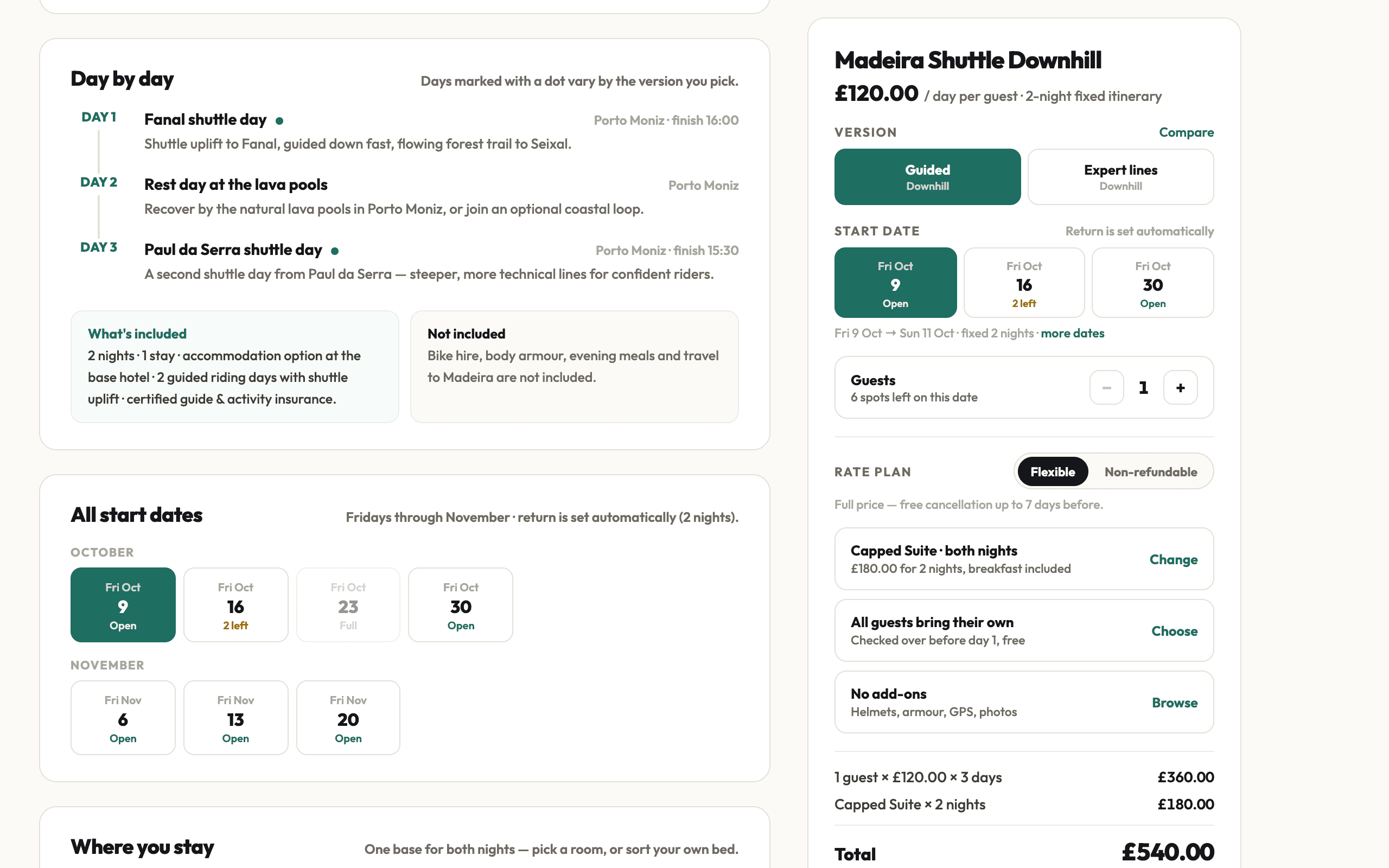
Give every day its own entry: where you start and finish, the distance, the climbing, the road or trail surface, and roughly how long people spend in the saddle. Add one line on what makes the day worth riding. Guests compare days, not trips.
02Be specific about where they sleep
“Comfortable hotels” tells a guest nothing. Name the place, or at least the town and type of room, and say what’s included: breakfast, dinner, luggage transfer. Specific details read as honest; vague ones read as a catch.
03Spell out what’s included, and what isn’t
- Bike hire, and which bike.
- Guide or self-guided, with support van or without.
- Meals, by day.
- Transfers to and from the start.
- What guests need to bring or pay for themselves.
Rule of thumb
If you change what’s included, update the itinerary the same day. An out-of-date inclusions list is the fastest way to lose a guest’s trust.
04Offer more than one level
A single version of a trip either bores strong riders or scares newer ones. If the route allows, offer a shorter and a longer option on the same days, so friends of different abilities can still book together.
A five-minute check
Does every day show distance, climbing and surface?
Can guests see where they’ll sleep each night?
Is “included” listed day by day?
Does the itinerary update when the package changes?
Is there an option for different abilities?
How RideLoop handles it
RideLoop holiday packages are built day by day, with real accommodation, inclusions and skill tiers on the same trip. Changes to a published package are staged and published deliberately, so the itinerary guests see always matches what’s being sold. Holiday packages are on the Starter plan and up.
See how holidays work →
Bruno Mota
Founder and CEO, Motacycles Ltd
Bruno runs Motacycles, a bike shop and workshop, and builds RideLoop on the same counter. More about the team