
01Decide what “bad weather” means
Pick a measure you can check the same way every time, such as the chance of rain for the departure window, and set a threshold. “We’ll see on the day” is not a policy; “above 60% chance of rain, we offer a free move” is.
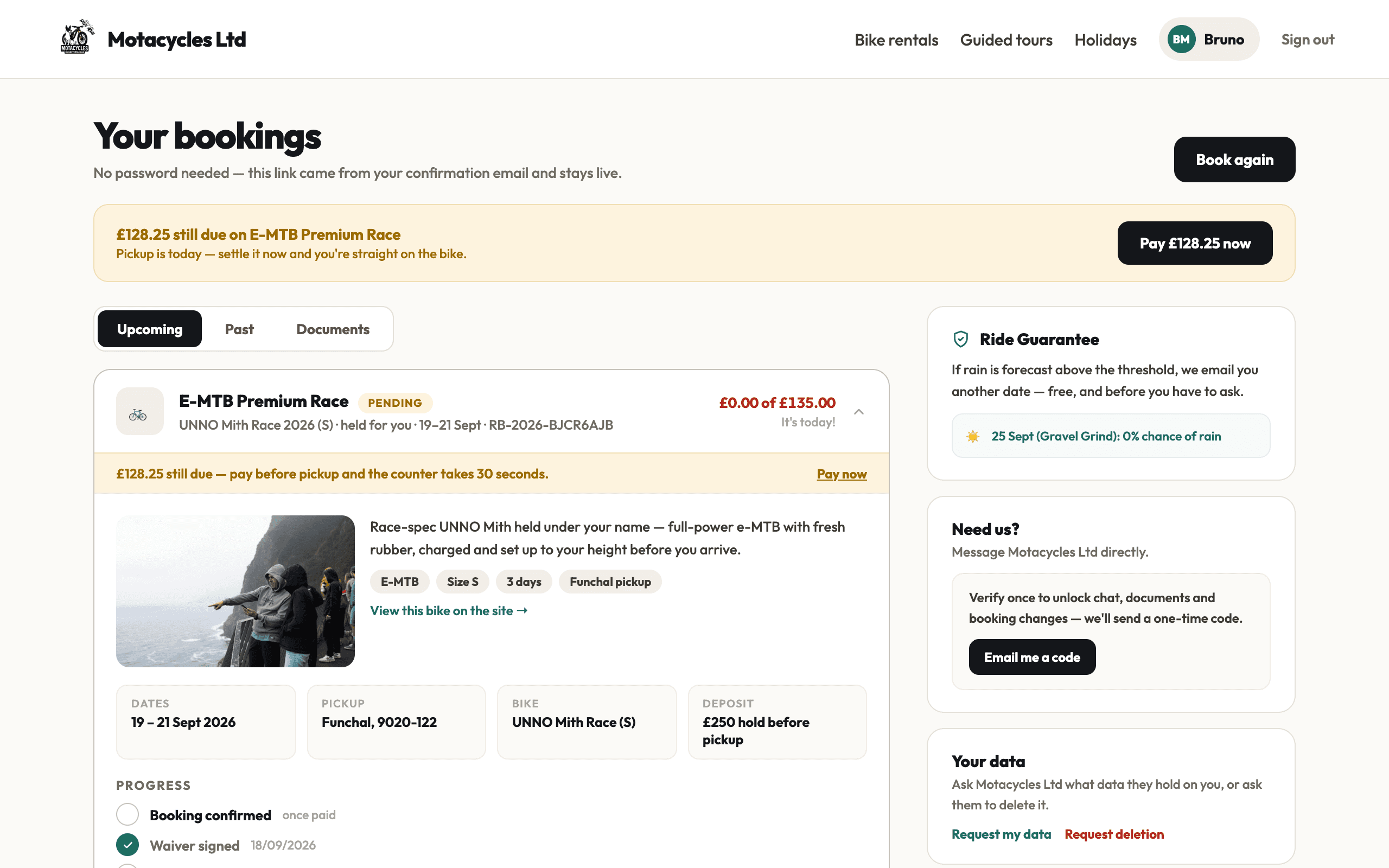
02Offer the move before they ask
Check the forecast at a fixed point before each departure. Above your threshold, send every guest a free reschedule offer. A guest who chooses a new date is a booking kept; a guest who cancels on their own is often a refund.
Rule of thumb
Offer, don’t impose. Some guests love riding in the rain, and should be allowed to keep their date.
03Keep the terms simple
- Same price for the new date, no fees.
- A clear window to accept, so you can plan the departure.
- Their original date stands if they do nothing.
- Put the policy on the tour page, not only in the terms.
04Know where it doesn’t fit
A rain policy works best for tours and holidays with a fixed start. For short self-guided rentals, guests usually decide on the day, and a simple flexible-cancellation option often works better.
A five-minute check
Is your weather threshold written down?
Do you check the forecast at the same point before every departure?
Do guests get an offer before they think to cancel?
Can a guest keep their date if they want to?
Is the policy visible on the tour page?
How RideLoop handles it
RideLoop’s Ride Guarantee checks the forecast ahead of every tour and holiday departure. Above your rain threshold, inside the window you set, each guest gets a free reschedule offer they can accept or ignore. Nothing moves automatically; the new date keeps the same price, with no cancellation fee.
See how tours work →
Bruno Mota
Founder and CEO, Motacycles Ltd
Bruno runs Motacycles, a bike shop and workshop, and builds RideLoop on the same counter. More about the team