
01Charging up front creates work for everyone
When you charge a deposit and refund it at the end of the hire, the guest sees two transactions, waits days for the money to come back, and you may lose card fees on both legs. If the bike comes back fine, which is most of the time, you have done all of that for nothing.
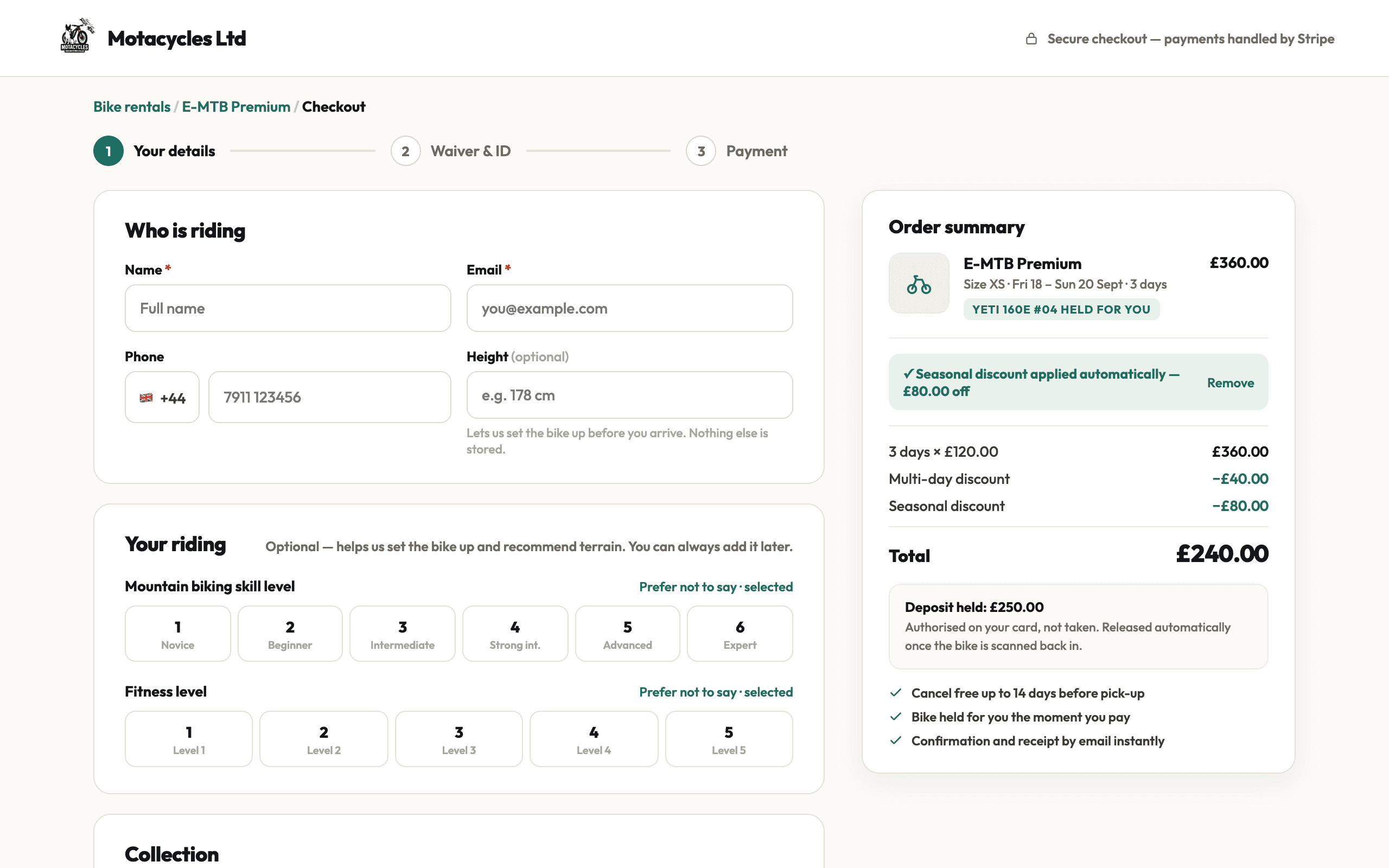
02Hold the card instead
An authorisation hold reserves the amount on the guest’s card without taking it. On a clean return you release it and the guest never sees a charge. If something is damaged, you capture only what the repair costs and release the rest.
Rule of thumb
Release the hold the moment the bike is checked back in clean. Every hour you hold money you don’t need costs goodwill.
03Know how long a hold lasts
Card holds don’t last forever. With most cards they expire after about seven days, so a deposit for a two-week trip needs a different plan, such as taking it closer to collection or charging and refunding for that booking only.
04Make damage claims easy to defend
- Photograph each bike at check-out and again at return, in the same place, with the same angles.
- Write the condition down while the guest is still there, not after they’ve left.
- Claim the actual repair cost and show the guest how you got there.
- Put the deposit amount and what it covers in your terms before the guest pays.
A five-minute check
Do guests know the deposit amount and what it covers before they pay?
Is the deposit a hold, or a charge you later refund?
How quickly is it released after a clean return?
What happens to deposits for hires longer than a week?
Could you show a guest the photos behind a damage claim?
How RideLoop handles it
Deposits in RideLoop are authorisation holds on the guest’s card, released on a clean return or captured exactly to the damage. Damage photos are captured in the return flow, and a major damage report takes the bike off sale. RideLoop takes no commission on a deposit or a damage claim.
See how bookings work →
Maria Ines Vasconcelos
Co-founder, COO and CFO, Motacycles Ltd
Maria runs operations and finance at Motacycles and RideLoop: the numbers, the processes and the day-to-day running of the business. More about the team